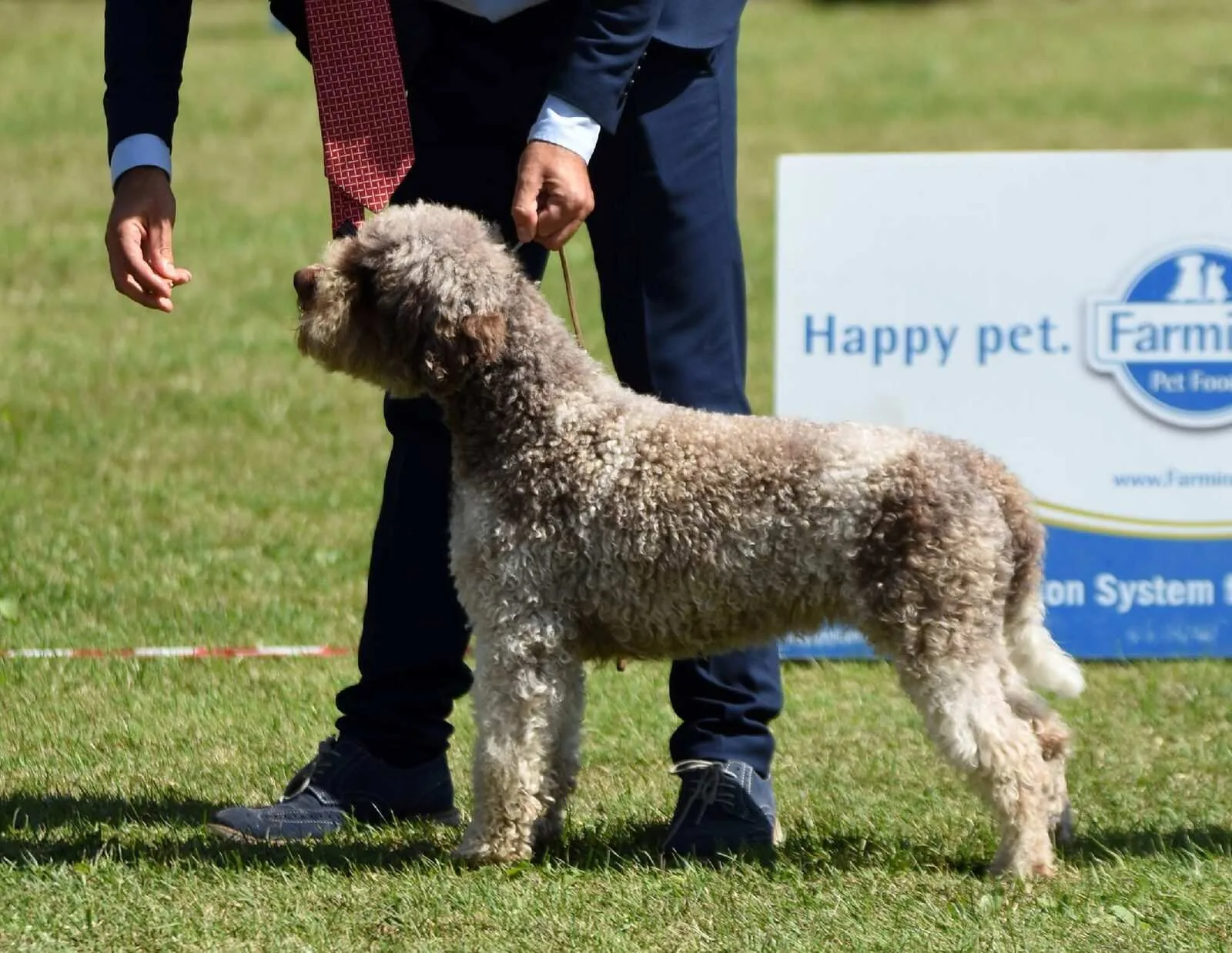
Heritage & Breed History
The Lagotto Romagnolo:
A Living Document
of Italian History
A breed whose history touches Etruscan archaeology, Renaissance painting, the draining of a great delta, near-obliteration, and a quiet act of rescue by four men in a region most of the world has never heard of.
There are breeds whose histories are interesting. And then there is the Lagotto Romagnolo, a dog whose history reads less like a breed profile and more like a chapter of Italian civilization, touching Etruscan archaeology, Renaissance painting, the draining of a great delta, the near-obliteration of a living tradition, and a quiet act of rescue by four men in a region of northern Italy most of the world has never heard of.
To understand the Lagotto is to understand where it comes from. Not in the vague sense of “it originated in Italy,” but in the specific, geographical, cultural sense. This is a dog shaped by a particular landscape, a particular way of life, and a particular kind of human need. It has been changed twice by history, once by the draining of the marshes, and once by the people who refused to let it disappear. Both changes made it what it is today.
The Setting
The Land: Romagna
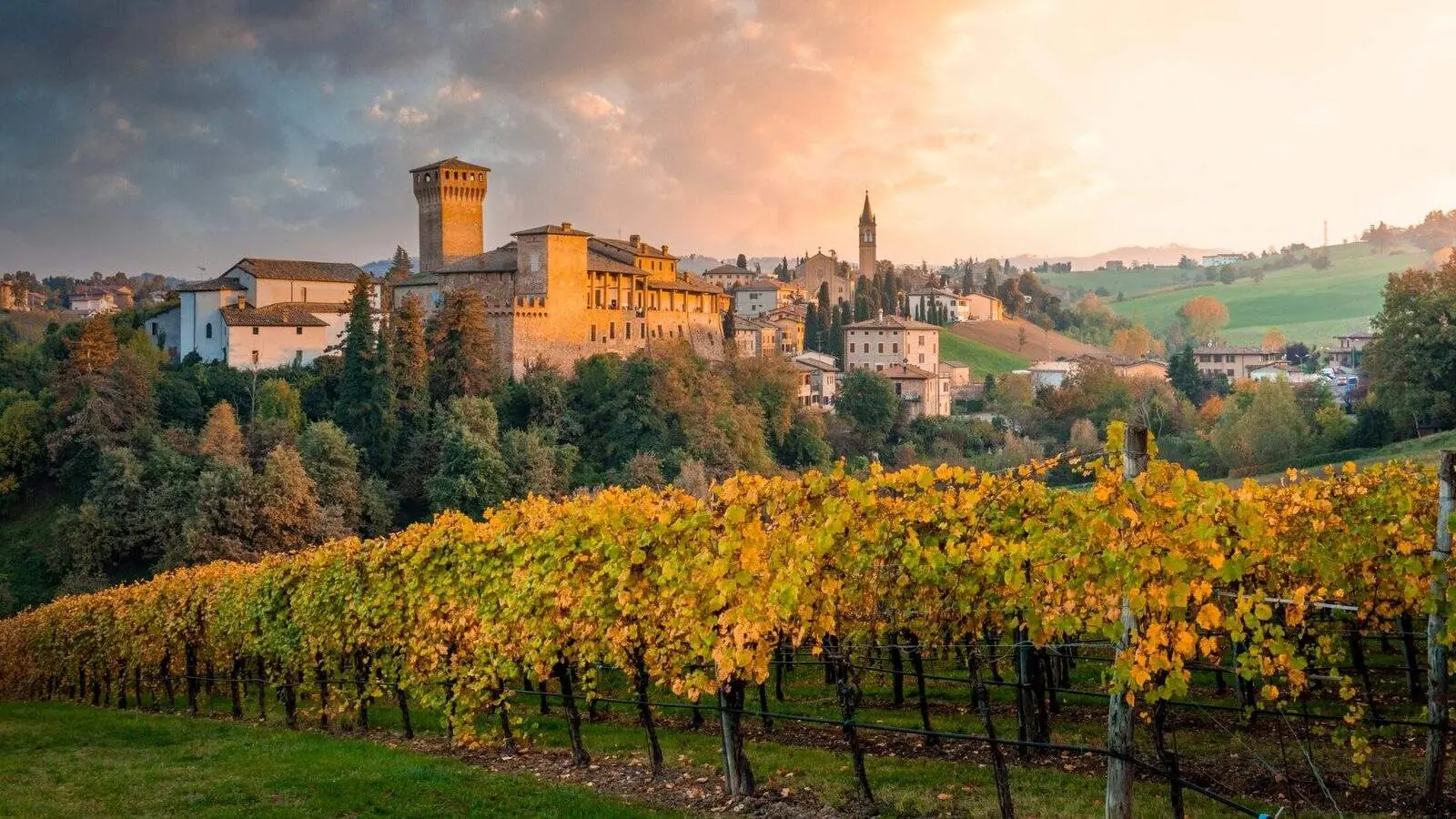
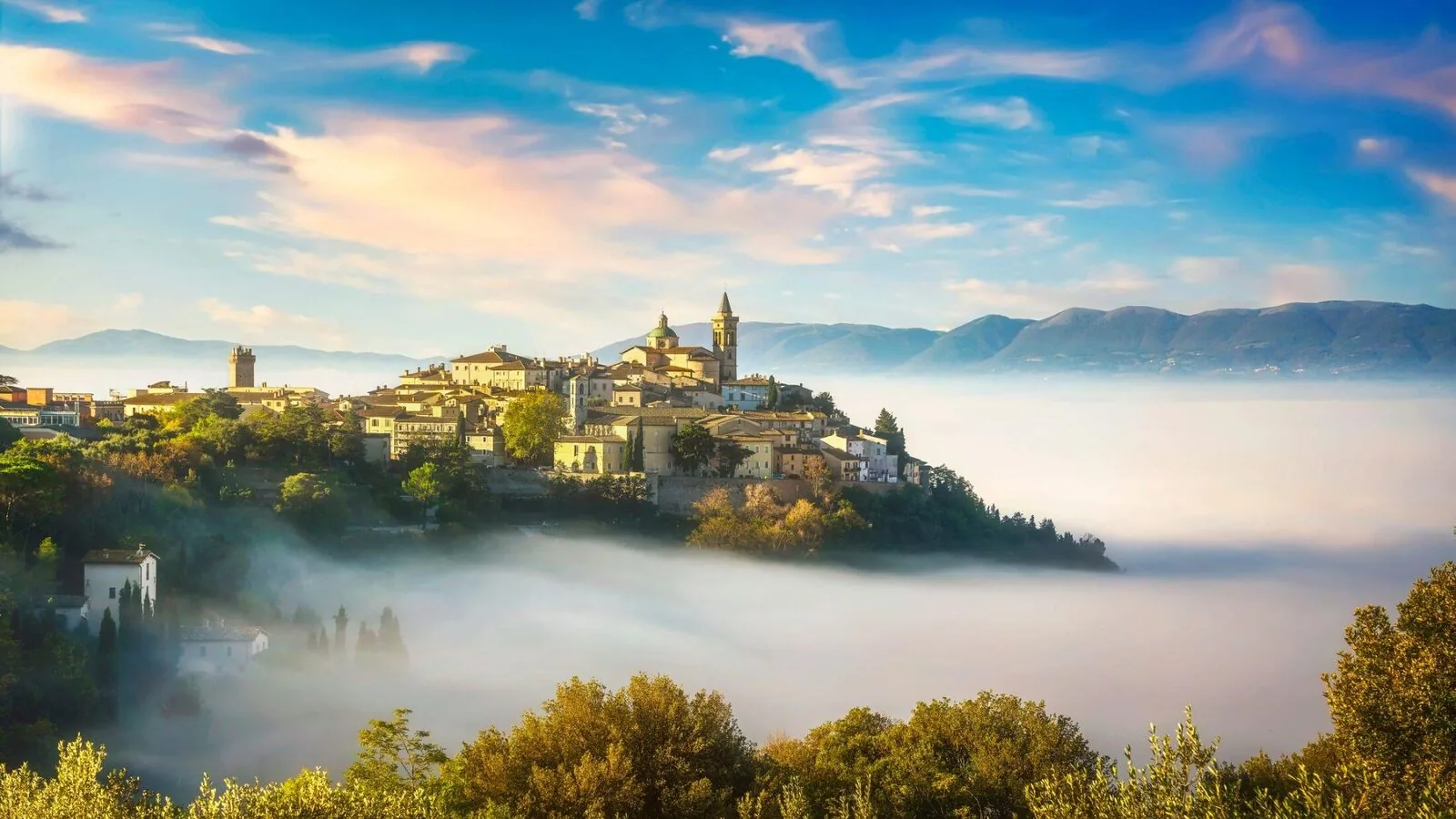
Romagna is the eastern half of what is now the administrative region of Emilia-Romagna in northern Italy, bounded by the Apennines to the south, the Adriatic to the east, and the broad, flat plains of the Po Valley stretching north toward the river. It is an ancient place. Julius Caesar crossed the Rubicon at its northern edge in 49 BC. Ravenna, one of Romagna’s great cities, served as the capital of the Western Roman Empire in its final decades, and later as the seat of Byzantine rule in Italy. Its mosaics are among the oldest and most beautiful in the Western world.
But for most of its history, the defining feature of Romagna’s eastern lowlands was not its cities or its art. It was its water.
The Delta del Po, the vast, labyrinthine marshland where the Po River meets the Adriatic near the ancient lagoons of Comacchio, was one of the great wetland ecosystems of Europe. For centuries, this was a world unto itself: shallow lakes, reed beds, and tidal flats teeming with waterfowl, worked by a people known as the vallaroli, the marsh-dwellers, who lived in punts and barrels set out on the water, hunting coots and ducks by the thousands using a technique that involved encircling vast flocks with a line of boats and driving them together. Their inseparable companion in this work was a small, curly-coated dog with a water-repellent coat and an extraordinary nose.
That dog was the Lagotto.
~500 BC – 1876 The Documentary Record
The Ancient Record
The name itself tells the story. Lagotto derives from the Romagnolo dialect word Càn Lagòt, literally “water dog” or “wetland hunting dog with a crimped, curly coat.” In some accounts, it traces further back to lago, the Italian word for lake. Either way, this is a dog that carries its origin in its name.
How old is the breed? The honest answer is: very old, and the evidence is specific. In the Etruscan necropolis of Spina, an ancient port city near modern Ferrara, occupied from roughly the sixth to the third centuries BC, archaeologists have found representations of hunting and fishing scenes that consistently include a dog matching the description and appearance of the modern Lagotto Romagnolo. This is a dog documented in the archaeological record more than 2,500 years ago.
“Rough and curly hair that does not fear sun, ice, or water, that climbs mountains, fords rivers, and runs onto steep rocky places, its head and hair resemble that of a ram.”
“A curly-haired coot-hunting dog found throughout the flat marshland areas of the lowlands of Emilia and Romagna.”
By 1876, the first edition of Ercolani’s Vocabolario Romagnolo-Italiano, the definitive dictionary of the Romagnolo dialect, translates Càn Lagòt simply as “Lagotto,” noting it as the standard term in the hunting vocabulary of the region.
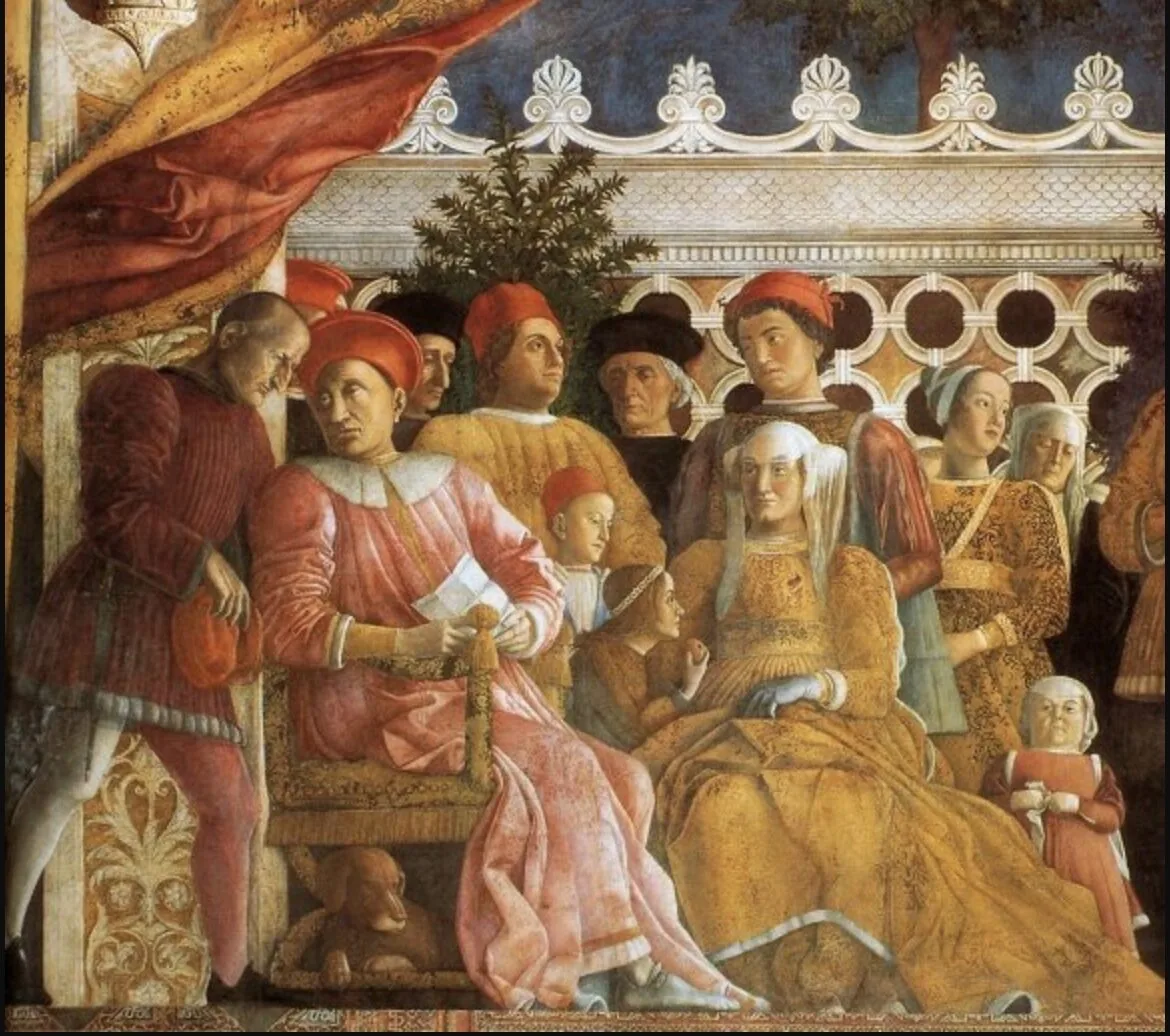
In Andrea Mantegna’s fresco cycle in the Camera degli Sposi at the Ducal Palace of Mantua, painted between approximately 1465 and 1474, a small, curly-coated dog appears at the feet of Ludovico III Gonzaga, Marquis of Mantua, depicted in every morphological detail as the modern Lagotto. The modern dog is identical in every detail to the medieval one painted by Mantegna. Across more than five centuries, the Lagotto has not changed.
Dr. Giovanni Morsiani · Il Lagotto Romagnolo, 1996
19th Century The Great Change
From Water to Forest Floor:
The Transition
The world that created the Lagotto began to disappear in the second half of the nineteenth century. Italy’s industrial age brought with it ambitious land reclamation projects across the Po Delta. The great marshes of Comacchio and the wetlands of the Romagnolo lowlands were systematically drained and converted to agriculture. The vast flocks of waterfowl that had sustained the vallaroli for centuries were gone. The Lagotto’s original purpose, retrieving game from cold water for long hours, diving and swimming in conditions that would defeat most breeds, was no longer needed.
What happened next was not planned. It was discovered.
The same attributes that had made the Lagotto exceptional in water, an extraordinary, carefully developed nose, high intelligence, a working temperament that remained focused regardless of distraction, and a curly coat that proved equally effective against the thorns and briars of woodland terrain, turned out to make it an exceptional truffle dog. The truffle hunters of the Romagnolo Apennines, working the valleys of the Senio, the Lamone, and the Santerno, had already been relying on Lagotti informally for generations. By 1920, the breed’s reputation as a truffle finder was established throughout the hill country.
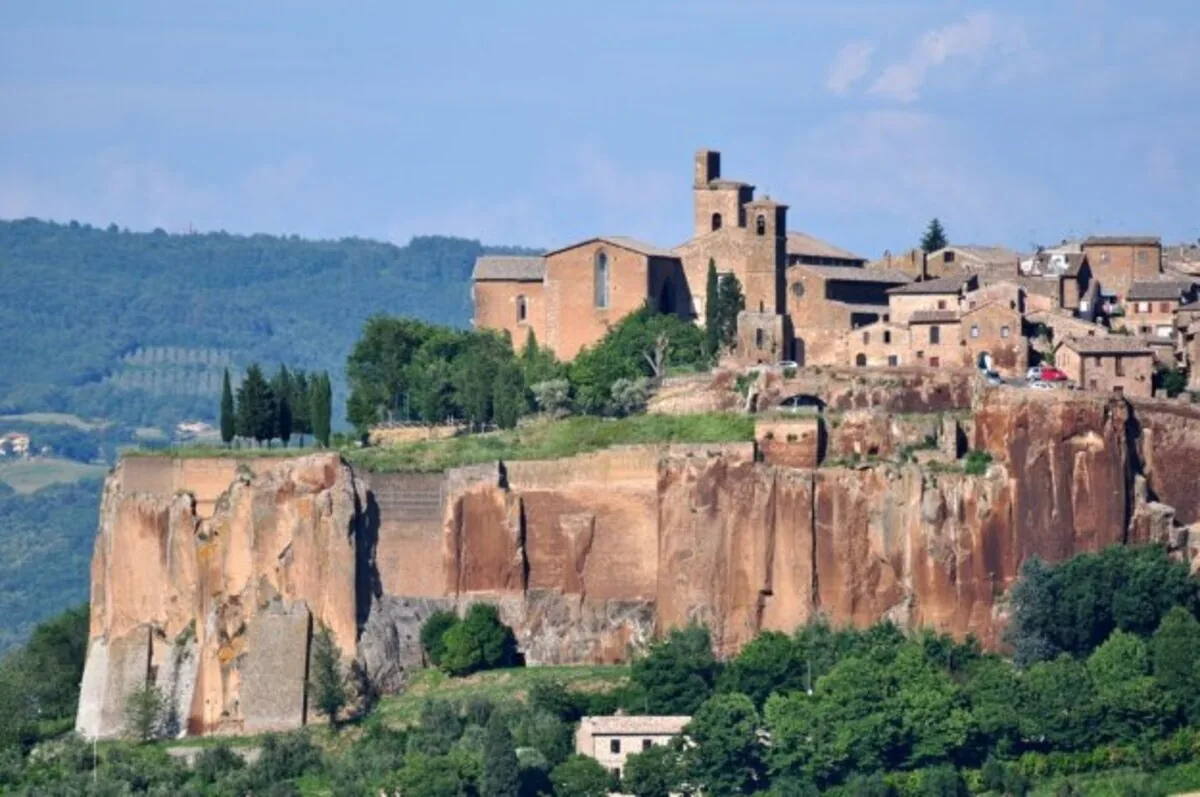
The truffle connection is not incidental to the breed’s character. Over generations of selection, the Lagotto’s hunting instinct was deliberately suppressed, breeders selected against the impulse to chase game, leaving a dog whose nose was fully engaged with the task at hand and whose temperament was oriented entirely toward its handler. The result is a dog that will work methodically across difficult terrain for hours, indicate an underground find with precision, and then look to you for what comes next. That quality, attentive, purposeful, partnered, did not come from accident. It was bred deliberately, over a very long time.
FCI Breed Standard No. 298
The Lagotto Romagnolo is the only breed in the world recognized by the Fédération Cynologique Internationale as a specialized truffle-search dog, a distinction earned through centuries of purposeful breeding, not marketing.
Early 1970s The Edge of Oblivion
The Near-Extinction
For all its utility as a truffle dog, the twentieth century nearly finished what the draining of the marshes had begun. As truffle hunting became a cottage industry rather than a formal occupation, the Lagotto’s breeding fell largely to truffle hunters whose only criterion was performance. Dogs that found truffles were bred, regardless of bloodline or type. Foreign crosses were introduced, often unknowingly, sometimes deliberately, in the belief that other breeds might sharpen the nose further. The careful, centuries-long maintenance of the Lagotto’s distinct type began to dissolve.
By the early 1970s, it was estimated that fewer than a dozen pure-bred Lagotti remained in the Romagna region.
The breed stood at the edge of extinction.
The Rescue · Mid-1970s, Romagna
The Four Men Who Saved a Breed
What saved it was the determination of four men who launched what amounted to a genetic reconstruction program, methodically locating remaining pure-bred dogs, recording precise biometric measurements on hundreds of subjects, and gradually rebuilding the Lagotto’s homogeneous type.
As Dr. Giovanni Morsiani later wrote, it was a reunification of two parallel stories: the Lagotto of the lowland wetlands and the Lagotto of the Apennine hills, brought together to lay the foundation for the breed’s renewal. The breed had been returned from the edge of oblivion by people who cared too much about it to let it go.
1999 – Present The American Chapter
The American Chapter
The Lagotto arrived in the United States quietly. The first documented import is believed to have taken place sometime in the 1980s, said to have been brought over by an airline attendant, the details since lost. The first recorded litter was born in Tennessee in 1999.
The early American fanciers formed the Lagotto Romagnolo Club of America in 2007, beginning with 39 charter members connected through an email group. The club spent the better part of a decade building the infrastructure required for full AKC recognition, health committees, breed education programs, a parent club structure, and relationships with the Italian breeders who had spent generations rebuilding the breed.
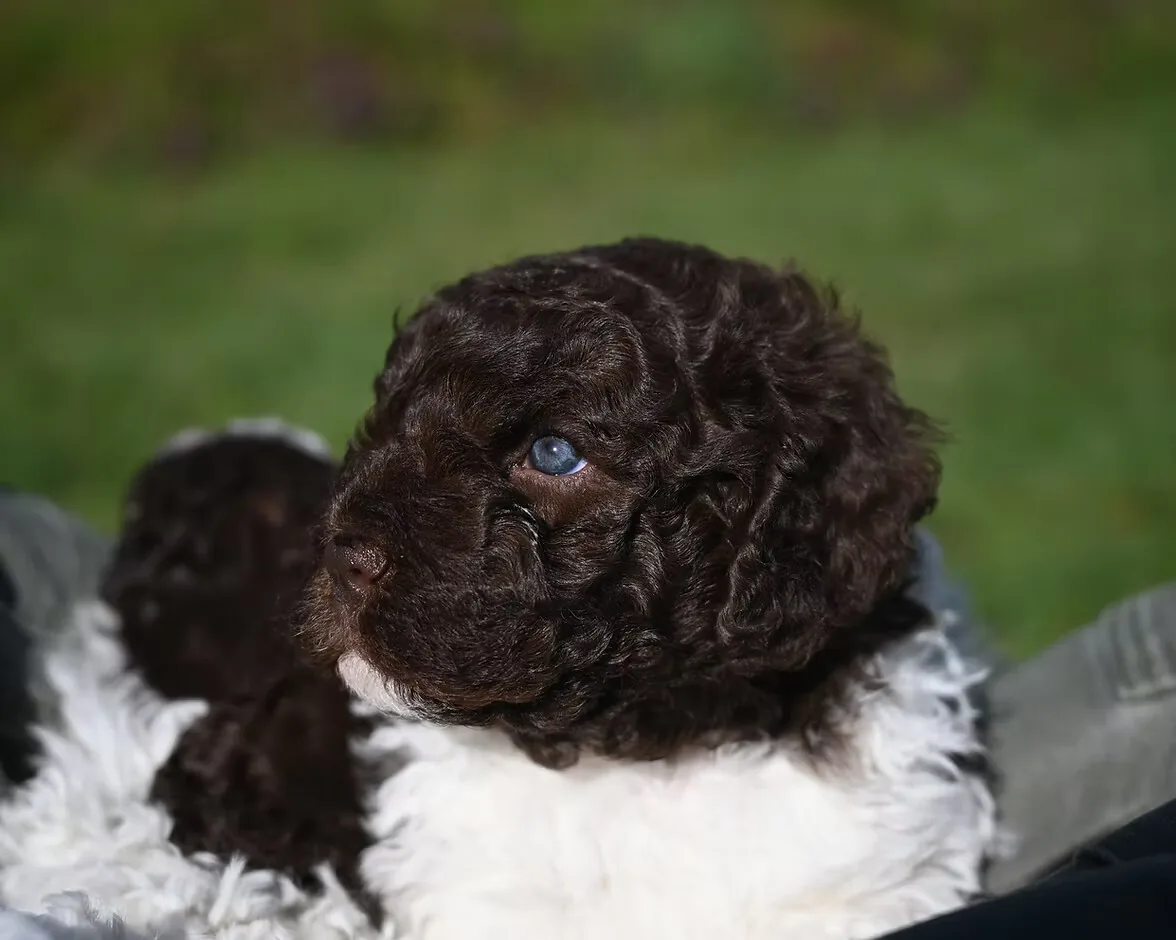
The breed remains rare in the United States. Its population is deliberately small, its breeders few, and the community that surrounds it is unusually knowledgeable and careful. In a country saturated with doodle crosses and commercially bred novelties, the Lagotto represents something genuinely different: an ancient working breed maintained with integrity, by people who take seriously the obligation they inherited from the four men who saved it.
The Conclusion
Why It Matters
Knowing where a breed comes from is not merely a matter of historical interest. With the Lagotto, the history explains the dog.
The curly coat was designed for cold water and thorny woodland. The nose was refined over centuries of purposeful work. The independence and problem-solving intelligence, the qualities that make this breed such an engaging, sometimes challenging companion, come from a dog that was expected to work far from its handler, in difficult terrain, making decisions on its own. The attentiveness, the sensitivity, the deep bond with its person: these are the marks of a breed that was always a partner, never merely a tool.
When you bring a Lagotto Romagnolo into your home, you are welcoming a dog with roots deeper than most. That is worth knowing.
The History Has Caught Your Attention.
The Next Step Is a Conversation.
We find that the families drawn to the Lagotto’s story, its depth, its specificity, what it took to preserve it, tend to be exactly the right kind of owner. We take time to learn about every family before a litter arrives. If this history has resonated with you, we’d like to hear from you.
Sources: Dr. Giovanni Morsiani, Il Lagotto Romagnolo (1996) · Club Italiano Lagotto · Lagotto Romagnolo Club of America · Lagotto Romagnolo Club of Great Britain · FCI Breed Standard No. 298 · AKC Breed Standard (2015) · Showsight Magazine breed history series · Ercolani, Vocabolario Romagnolo-Italiano (1876) · Erasmo di Valvasone (1591) · Bartolomeo Alberti (1716)
More from Northwest Lagotto