The Breeder’s Guide
Health & Wellness
What every Lagotto owner should know, and what every prospective buyer has the right to ask.
The Lagotto Romagnolo is tested for five conditions under the CHIC protocol: Benign Familial Juvenile Epilepsy (BFJE), Lagotto Storage Disease (LSD), hip dysplasia, patellar luxation, and annual ophthalmology exams by a board-certified ACVO specialist. Both BFJE and LSD are fully preventable through DNA testing and responsible pairing. At Northwest Lagotto, every breeding adult holds a current CHIC number, verifiable at ofa.org.
The Foundation
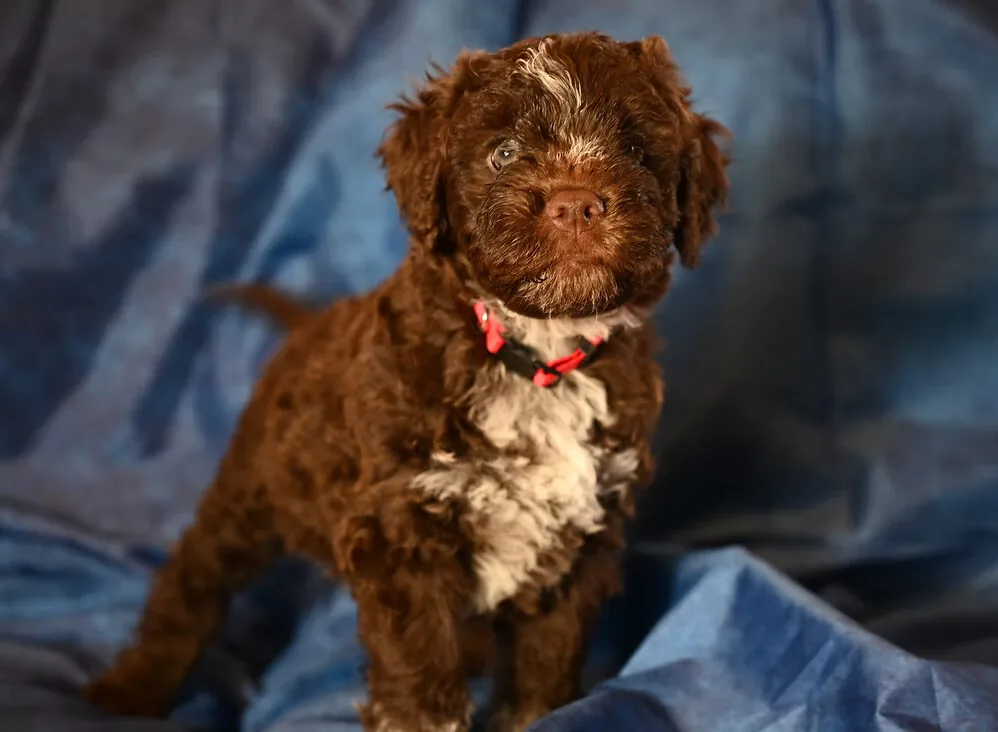
A Hardy Breed With a Long Working History
The Lagotto Romagnolo is a hardy breed with a long working history, and that heritage shows in their general robustness. These are dogs bred for centuries to work all day in difficult terrain, in cold water, and through thorny woodland, not to be fragile. The FCI breed standard describes the ideal Lagotto as “a rather rustic dog of good health,” and the lived experience of owners confirms it. A well-bred Lagotto with proper care can expect a lifespan of 15 to 17 years, exceptional for a dog of this size, and one of the genuine strengths of the breed.
But like all breeds, the Lagotto carries a small number of hereditary conditions worth understanding, and worth testing for. Responsible breeding starts with health data, not optimism. The good news is that every significant genetic condition in this breed is fully preventable through responsible breeding. Not manageable, preventable. A breeder who tests their dogs and makes informed pairings will not produce an affected puppy.
The Lagotto also carries a unique burden in its recent history: the near-extinction of the 1970s created a genetic bottleneck that affects every Lagotto alive today. Understanding this, and why genetic diversity matters as much as disease testing, is important for anyone serious about the breed. Both are covered in full on this page.
The CHIC Certificate
What We Test For, and Why Each Test Matters
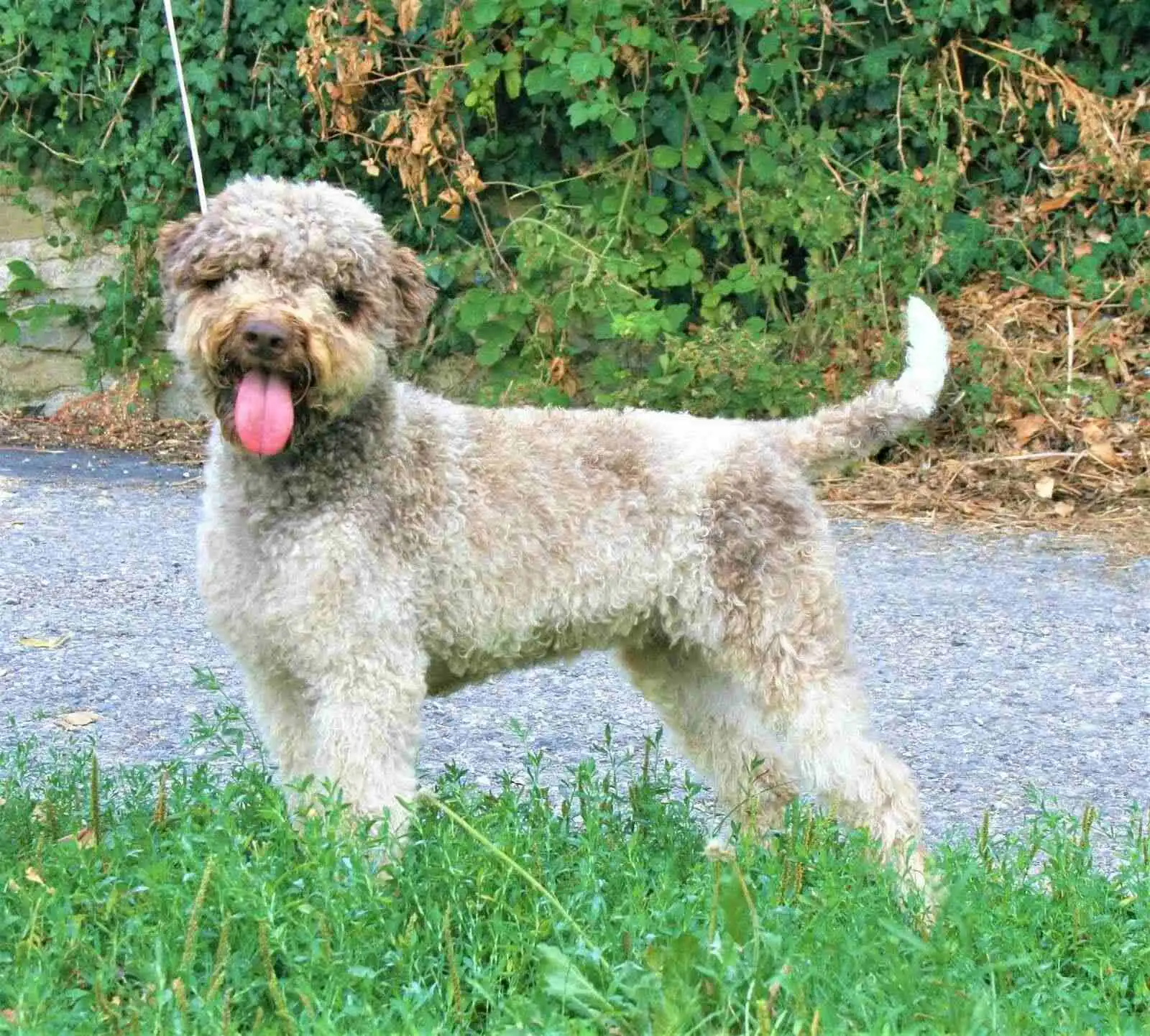
All of our breeding dogs hold current CHIC numbers through the OFA, the Canine Health Information Center. A CHIC number means a dog has completed every test required by the Lagotto Romagnolo Club of America and has those results publicly listed. It is not a guarantee of perfection; it is evidence that a breeder has done the work transparently and made their results verifiable by anyone.
At Northwest Lagotto, every breeding animal is health tested before being used in our program. We test for Lagotto Storage Disease, Benign Familial Juvenile Epilepsy, hip and elbow dysplasia, and eye conditions through OFA. We share these results openly and encourage every prospective puppy family to ask about them.
DNA: BFJE
Benign Familial Juvenile Epilepsy. Autosomal recessive neurological disorder causing seizures in puppies between 5–9 weeks. Self-resolving, but entirely preventable through testing. Clinically described in 2007; causative LGI2 gene identified at Helsinki in 2011.
DNA: LSD
Lagotto Storage Disease. Progressive, fatal neurodegenerative condition unique to this breed. Onset between 4 months and 4 years. No treatment exists. Identified via ATG4D gene mutation through research at the Universities of Helsinki and Bern.
OFA Hip Evaluation
X-ray evaluation read by an OFA radiologist. Excellent, Good, or Fair are passing scores. PennHip (distraction index) is also accepted and equally valid. Dogs must be 24 months for final OFA certification.
ACVO Eye Exam
Annual examination by a board-certified ACVO ophthalmologist. Required every year while a dog is in the breeding program, up to age eight. Checks for cataracts, progressive retinal atrophy, and other inheritable eye conditions.
OFA Elbow & Patella
Elbow dysplasia is rare in the Lagotto. The breed shows unusually low incidence even when hip scores are elevated. Patellar luxation (kneecap displacement) is also evaluated. Both are required for CHIC certification.
DNA: Hyperuricosuria (HUU)
Elevated uric acid in the urine, predisposing dogs to bladder and kidney stones requiring surgical removal. Autosomal recessive inheritance. Not CHIC-required but tested by responsible breeders including in our own program.
Health results for any of our breeding dogs can be verified at ofa.org by searching their registered names. We share all documentation during the placement process. No certificate you cannot verify independently is worth the paper it’s printed on.
Condition One
Benign Familial Juvenile Epilepsy (BFJE)
BFJE is a neurological disorder unique to the Lagotto Romagnolo, with autosomal recessive inheritance. Affected puppies suffer epileptic seizures, body tremors, uncoordinated movement, and stiffness, beginning between 5 and 9 weeks of age. The seizures resolve spontaneously between 8 and 13 weeks. The name is accurate: it is benign. Most affected puppies go on to live normal lives, though some carriers may have occasional epileptic episodes through adulthood.
BFJE was first described in the Lagotto Romagnolo in 2007 (Jokinen et al.); the causative LGI2 gene mutation was identified at the University of Helsinki in 2011 (Seppälä et al.). DNA testing is widely available and used by responsible breeders worldwide. A carrier bred to a DNA-clear dog produces zero affected puppies. This condition should not exist in a well-managed breeding program.
Condition Two
Lagotto Storage Disease (LSD)
Lagotto Storage Disease is a progressive neurodegenerative condition caused by an enzyme deficiency within the lysosomes of the cell, the cellular structures responsible for recycling damaged proteins. When the ATG4D gene carries a pathogenic mutation in both copies, cell waste accumulates in the neurons of the nervous system, particularly in the cerebellum, which controls coordination and balance.
The first signs typically involve clumsiness and abnormal eye movements (nystagmus), progressing to cerebellar ataxia, the characteristic staggering, uncoordinated gait. Behavioral changes including depression, restlessness, and aggression toward people or other dogs may develop. Age of onset is variable, from four months to four years, with an average of approximately two years. Rate of progression varies significantly between individuals.
There is no treatment. Affected dogs are typically euthanized when their quality of life deteriorates sufficiently.
LSD has a carrier frequency of approximately 10% in the Lagotto breed, meaning roughly one in ten Lagotti carries one copy of the mutated gene. Comparable breed-specific recessive diseases typically run below 1% in other breeds; the Lagotto’s elevated rate is a direct consequence of the genetic bottleneck of the 1970s, when the breed was rebuilt from a very small number of individuals. Some of those individuals carried the LSD mutation. It is not a failure of the modern breed. It is the inheritance of a rescue. The appropriate response is systematic testing and responsible pairing.
The Genetics
Carrier vs. Affected, The Most Misunderstood Concept
This distinction is the single most important piece of genetic literacy for any Lagotto buyer, and it is frequently misunderstood, sometimes deliberately so by breeders who don’t want to explain their results.
Both BFJE and LSD are autosomal recessive conditions. A dog must inherit two copies of the mutated gene, one from each parent, to be affected. A dog that inherits only one copy carries that gene but shows no symptoms whatsoever. A carrier is a completely healthy dog.
The Three Possible Results
For BFJE and LSD, the two autosomal recessive conditions in this breed
The key rule: a carrier bred to a clear dog produces zero affected puppies. This is why responsible breeders do not simply exclude all carriers from breeding programs, doing so would unacceptably narrow an already small gene pool. The correct approach is to test every breeding dog and ensure no two carriers are ever paired together.
The possible pairings and their outcomes:
| Pairing | Possible Offspring | Verdict |
|---|---|---|
| Clear × Clear | 100% clear | ✓ Ideal |
| Clear × Carrier | 50% clear, 50% carrier, zero affected | ✓ Acceptable |
| Carrier × Carrier | 25% clear, 50% carrier, 25% affected | × Never |
| Affected × Any | All offspring carry at least one copy | × Never |
Orthopedic & Ocular
Hips, Elbows & Eyes
Hips.
Hip dysplasia, abnormal formation of the hip joint leading to arthritis, pain, and mobility issues over time, is present in the Lagotto. It is not a high-incidence breed compared to larger or heavily structured dogs, but it exists and must be tested. All breeding dogs in our program have OFA or PennHip evaluations on file and publicly listed. Only dogs with passing scores are used.
Genetics establish predisposition (heritability is estimated at 20–60% depending on breed), but environment determines whether and how severely the condition manifests. Many genetically predisposed dogs never develop clinical signs with proper management. The major modifiable risk factors, in order of impact:
Body condition. The Purina longitudinal study showed that puppies maintained at lean body condition from puppyhood had half the rate of hip dysplasia and lived an average of 15% longer than their free-fed littermates. Feed measured portions of a complete medium-breed puppy formula and keep the puppy visibly lean, ribs easily felt, waist visible from above. Never supplement calcium: puppies under six months cannot regulate intestinal calcium absorption, and excess calcium directly contributes to developmental bone disease.
Exercise type. The Krontveit study (2012), which followed over 500 puppies from birth through skeletal maturity, found that puppies under three months with regular stair access had increased rates of hip dysplasia, but that off-leash free play on soft, varied terrain was actually protective. The distinction is between forced, repetitive impact (stairs, jogging, hard-surface fetch) and self-directed play where the puppy sets the pace. The popular “five-minute rule” has no published evidence behind it. Your puppy’s own fatigue signals are more reliable than any formula.
Surfaces. Puppies raised on slippery floors (hardwood, tile, polished concrete) are 1.6 times more likely to develop clinical signs of hip dysplasia. Use rugs, mats, or runners where the puppy spends time.
Spay/neuter timing. Sex hormones, primarily oestrogen, which in both males and females signals growth plates to close, regulate the timing and geometry of skeletal development. Removing these hormones before skeletal maturity produces slightly longer, disproportionate bones and altered joint mechanics. The Hart et al. study (2020) found joint disorders at 2–4× the rate in dogs neutered before one year compared to intact dogs. Our purchase contract requires waiting until at least 24 months. The full science is covered in our spay/neuter essay.
Growth plates in medium breeds close between roughly 12 and 14 months depending on the bone. Different bones close at different times, the ankle as early as four months, the shoulder and wrist as late as fourteen. During this window: avoid stairs and jumping from heights for the first four months, transition to moderation from four to six months, and avoid forced high-impact exercise (jogging on hard surfaces, repetitive jumping) until fourteen months. Free play at the puppy’s own pace on soft ground, grass, dirt, gentle slopes, is beneficial at every age. Swimming is the gold standard for low-impact conditioning.
Elbows.
Elbow dysplasia is present in the breed but at low frequency. The Lagotto shows an unusually low incidence even when hip scores are elevated in the same individual, a pattern noted by Italian breeders and confirmed in OFA data. Elbow testing is required for CHIC certification and part of our program, but it is not a primary concern for this breed in the way it is for retrievers or German Shepherds.
Eyes.
Annual ACVO examination is required for all breeding Lagotti while active in the breeding program, recertified each year up to age eight. Cataracts, any opacity within the lens that can progress to impaired or lost vision, are the primary hereditary eye concern. Progressive Retinal Atrophy (PRA) has also been documented in the breed. Early detection through annual examination allows breeders to identify and remove affected individuals before they produce offspring with heritable eye disease.
The Deeper Issue
Genetic Diversity, The Challenge Unique to This Breed
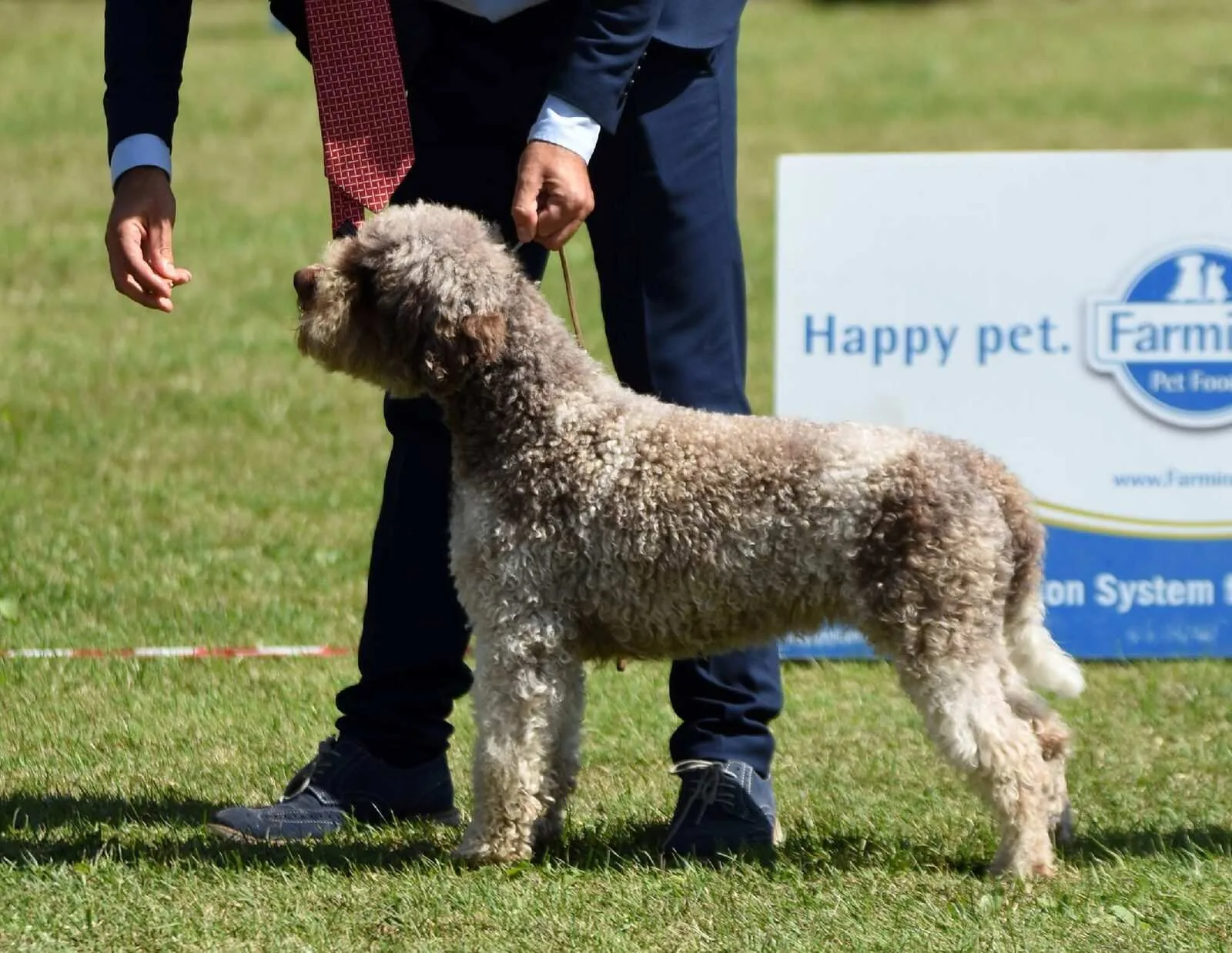
The Lagotto Romagnolo is thought to be the foundation of many if not all of the modern non-shedding, hypo-allergenic breeds, including the Poodle, Maltese, Portuguese Water Dog and others. In spite of this, it nearly went extinct just a few decades ago when it was rescued from this fate by a group of concerned Italian Lagotto lovers. At that time, there were very few Lagotto around, and thus the genetic diversity of the breed was very limited.
Fast forward to today and the Lagotto Romagnolo as a breed does not enjoy the breadth of genetic diversity of most other dog breeds. To address this, it should be the goal of every Lagotto breeder to strive not only for improvements in the breed’s health while conforming to the Standard, but to ensure the greatest genetic diversity possible, which, when carefully selected, will further the goal of improvement to the health of the breed as a whole.
The Central Tension in Lagotto Breeding
Eliminating Disease vs. Maintaining Diversity
Traditionally, breeders keep a number of males and females from their own breeding program, offspring they intend to use in future matings. Without the importation of outcrossed genetics, the diversity of that group becomes concentrated over time, increasing the chances for unwanted genetic traits and health issues creeping into the population.
This raises a question for concerned and responsible breeders, for it brings into conflict two opposing goals: the desire to eliminate unwanted genetic disorders and the need to maintain the broadest possible gene pool. In an effort to eliminate diseases susceptible to the breed, an obvious goal would be to exclude from any breeding program any dog that carries an autosomal-recessive gene for a known genetic disorder. The result would be a gene pool of genetically “clean” dogs, but so small that within a few generations it leads to a highly concentrated, fragile genetic population.
One simple way of viewing this is through the concept of the Coefficient of Inbreeding, the probability of inheriting two copies of the same allele from an ancestor that occurs on both sides of the pedigree. A high coefficient means a high proportion of homozygous genes, and homozygosity is the mechanism of both recessive genetic disease and general immune fragility. This will take time to reduce and will improve with successive generations through conscientious breeding programs. There are now database tools available to breeders to assist in identifying genetic coefficient, and they may be consulted alongside careful review of each proposed mating pair’s pedigree.
The Northwest Lagotto approach.
At Northwest Lagotto, we believe that while line breeding and inbreeding within a breeding program results in consistent, predictable traits, it reduces genetic diversity and thus results in weakening our beloved breed. For this reason, as a rule, Northwest Lagotto will outcross when selecting mating pairs, seeking to improve the diversity and robustness of the breed as a whole and our own puppies in particular.
This means we actively seek dogs from different bloodlines, different kennels, and when appropriate, different countries. Our Italian bloodlines, drawn from the kennels and breeders who rebuilt the breed in the 1980s and 1990s, give us access to genetic material that is genuinely divergent from most American-bred Lagotti. Breadth of bloodline is not a marketing point. It is a breeding strategy with a specific health rationale.
Consumer Guidance
What to Ask Any Breeder
Knowing what to look for, what questions to ask a breeder, and how to support your Lagotto’s long-term health gives you a meaningful advantage as an owner, and as a buyer. Every question below can be answered by any responsible breeder in under five minutes. Hesitation, deflection, or missing documentation are informative answers in themselves.
A Developing Science
Spay & Neuter, What the Current Research Shows
The question of when, or whether, to spay or neuter your Lagotto is more nuanced than most veterinary practices currently acknowledge. The research has shifted substantially in the last decade, and what was standard advice in 2010 is no longer the consensus position among researchers studying the question rigorously.
The short version: sex hormones are responsible for far more than reproduction. Estrogen and testosterone regulate bone growth plate closure, joint mechanics, immune function, and neurological development. Removing the gonads before a dog has reached skeletal maturity, which in medium breeds occurs around 12 months of age, removes the hormonal signals that govern all of these systems during a critical developmental window.
Questions About Your Specific Dog?
Whether you have a puppy from us, are on our waitlist, or are evaluating a breeder before making a decision. We are glad to answer questions about health testing, genetics, COI, or anything on this page. We answer every message personally.
More from Northwest Lagotto
Common Questions
What families ask about Lagotto health
What health tests should a Lagotto Romagnolo breeder perform?
At minimum: Lagotto Storage Disease (LSD) DNA test, Benign Familial Juvenile Epilepsy (BFJE) DNA test, OFA hip, elbow, and patella evaluation, and annual ACVO/CERF eye examination. All five tests are required for CHIC certification in the Lagotto Romagnolo.
What is CHIC certification for Lagotto Romagnolo?
CHIC (Canine Health Information Center) certification for the Lagotto Romagnolo requires completion of all five recommended health tests: LSD DNA, BFJE DNA, OFA hips, OFA elbows, OFA patellas, and annual ACVO eye examination. Results are published in a public database.
What is Lagotto Storage Disease?
Lagotto Storage Disease (LSD) is a fatal progressive neurological condition caused by a recessive mutation in the ATG4D gene. Affected dogs accumulate abnormal cellular material in the cerebellum and brain stem, leading to progressive ataxia, tremor, and behavioral changes. Onset is typically between 4 months and 4 years. There is no treatment.
The condition is entirely preventable through DNA testing. A dog can only be affected if it inherits two copies of the mutation, one from each parent. A carrier (one copy) shows no symptoms and can be safely bred to a clear (zero copies) dog with no risk of producing affected offspring. Both Northwest Lagotto breeding adults are DNA-tested clear.
What is Benign Familial Juvenile Epilepsy?
Benign Familial Juvenile Epilepsy (BFJE) is a recessive epileptic condition specific to the Lagotto Romagnolo, caused by a mutation in the LGI2 gene. Affected puppies experience seizure episodes typically between 5 and 9 weeks of age. In most cases the seizures resolve spontaneously by 8–13 weeks without lasting neurological damage, hence ‘benign’ in the name.
Despite the benign course in most individuals, the condition is alarming in affected litters and is considered a serious welfare and breeding concern. DNA testing identifies clear, carrier, and affected status. Breeding a clear to a clear produces no affected offspring.
How do I verify a Lagotto breeder's health test results?
All OFA health test results, hips, elbows, patellas, and eyes are publicly searchable at ofa.org. Search the dog’s registered name or AKC number. Results that appear in the OFA database are verified; results shared only as screenshots or certificates without a corresponding OFA record should be treated with scepticism.
DNA test results for LSD and BFJE are also reportable to OFA and will appear in the same search if the breeder has submitted them. Ask for the OFA numbers, not just a copy of the certificate.
What is the life expectancy of a healthy Lagotto Romagnolo?
15–17 years is the breed-typical range, placing the Lagotto among the longer-lived medium breeds. This is meaningful for both the commitment you are making and the return on that commitment. A dog from health-tested parents, maintained at a healthy weight, given appropriate exercise, and provided regular veterinary care has every reason to reach the high end of that range.